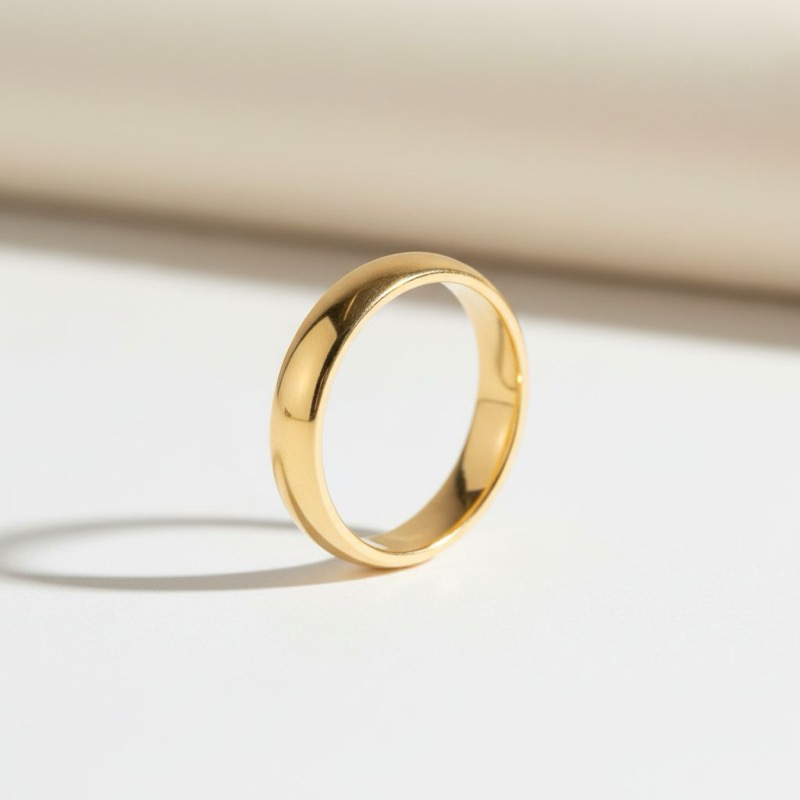
Research Series: AI Model Comparison for Jewelry Photography
- ← Part 1: Baseline Capability Test
- ← Part 2: Head-to-Head Model Comparison
- Part 3: Studio Shots Comparison (this article)
Abstract
Studio product photography presents distinct challenges from on-hand jewelry shots: precise camera angle control replaces hand realism as the primary technical hurdle. We evaluate 4 frontier models—Nano Banana Pro, Nano Banana (Google), FLUX.2 Pro, FLUX.2 Max (Black Forest Labs)—across 60 images spanning 5 camera angles and 3 ring complexity levels. Our findings reveal that Generate workflow achieves 77% publishable rate versus 53% for Replace, with Generate also producing superior ring accuracy (100% vs 83% good rate). Nano Banana Pro emerges as the clear leader with 93% publishable rate, but Nano Banana exhibits a critical failure mode on Circle View angles (0% accuracy). These results suggest different model selection criteria for studio versus on-hand photography.
1. Introduction
1.1 The Problem
Jewelry e-commerce requires multiple shot types beyond the on-hand images evaluated in Parts 1 and 2 of this research series. Studio shots—product-only images on neutral backgrounds—serve distinct purposes:
- Hero shots: Primary product display, typically 3/4 elevated angle
- Flat lays: Top-down angles for styled compositions
- Detail shots: Specific angles showing ring opening, band profile, or setting details
These shots demand precise camera angle control, a requirement largely absent from on-hand photography where hand positioning provides most of the compositional direction.
1.2 Research Question
We address two questions:
- Angle control: Can AI models reliably produce studio shots at specific camera angles?
- Workflow comparison: Does the Generate vs Replace performance pattern from Part 2 hold for studio shots?
1.3 Key Findings Preview
- Generate workflow dominates studio shots (77% vs 53% publishable)
- Ring accuracy is perfect in Generate (100% good) vs 83% in Replace
- Nano Banana Pro achieves 93% publishable rate (highest across all conditions)
- Nano Banana completely fails Circle View angle (0% accuracy across all attempts)
2. Methodology
2.1 Models Evaluated
Based on Part 2 results, we selected the top performers from each workflow:
Generate Workflow:
| Model | Part 2 Win Rate | Cost |
|---|---|---|
| Nano Banana Pro | 88.9% | $0.15 |
| Nano Banana | 58.9% | $0.039 |
Replace Workflow:
| Model | Part 2 Win Rate | Cost |
|---|---|---|
| FLUX.2 Max | 70.0% | $0.19 |
| FLUX.2 Pro | 68.9% | $0.09 |
2.2 Test Design
60 images total:
- 4 models
- 3 rings (simple, medium, complex)
- 5 camera angles
- 1 generation per condition
Camera Angles:
| Angle | Description | Difficulty |
|---|---|---|
| Hero 3/4 View | Standing ring, 45° camera elevation | Standard |
| Bird’s Eye 90° | Laying flat, perfect overhead | Moderate |
| Flat Lay | Laying flat, 70° camera elevation | Moderate |
| Circle View | Standing, eye level, ring hole visible | Hard |
| Line View | Standing, eye level, band as thin line | Hard |
2.3 Evaluation Criteria
Each image was rated blind (evaluator could not see model or workflow) on four dimensions:
| Criterion | Scale |
|---|---|
| Angle accuracy | 1-5 (5 = perfect match) |
| Ring accuracy | Exact / Close / Similar / Wrong |
| Quality | 1-5 (visual appeal, realism) |
| Publishable | Yes / Maybe / No |
2.4 Prompts
Generate prompts used synonym-stacked JSON format optimized in prior angle control research:
{
  "shot_type": ["three quarter view", "3/4 view", "hero shot"],
  "subject": ["this ring", "the ring from reference"],
  "placement": ["standing upright", "ring standing"],
  "camera_angle": ["45 degrees", "elevated front"],
  "style": ["product photography", "e-commerce"]
}
Replace prompts instructed models to swap rings while preserving template composition.
3. Results
3.1 Model Rankings
| Rank | Model | Angle Avg | Quality Avg | Publishable (Yes) |
|---|---|---|---|---|
| 1 | Nano Banana Pro | 4.33 | 4.73 | 93% |
| 2 | FLUX.2 Max | 4.67 | 4.33 | 60% |
| 3 | FLUX.2 Pro | 4.40 | 4.33 | 47% |
| 4 | Nano Banana | 3.53 | 4.53 | 60% |
Nano Banana Pro achieves the highest publishable rate and quality score, though FLUX.2 Max edges ahead on raw angle accuracy.
3.2 Workflow Comparison
| Metric | Generate | Replace | Delta |
|---|---|---|---|
| Publishable (Yes) | 77% | 53% | +24% |
| Usable (Yes+Maybe) | 100% | 87% | +13% |
| Quality avg | 4.63 | 4.33 | +0.30 |
| Ring accuracy (Good) | 100% | 83% | +17% |
| Angle accuracy avg | 3.93 | 4.53 | -0.60 |
Generate workflow wins on every metric except raw angle accuracy. The 17-point ring accuracy advantage is particularly notable—Replace workflow introduces variation, with 17% of outputs rated “similar” (noticeably different from reference).
3.3 Angle Performance
| Angle | Accuracy Avg | Perfect (5) Rate | Failure (1-2) Rate |
|---|---|---|---|
| Hero 3/4 View | 4.92 | 92% | 0% |
| Bird’s Eye 90° | 4.25 | 75% | 8% |
| Flat Lay | 4.00 | 67% | 17% |
| Circle View | 4.00 | 67% | 25% |
| Line View | 4.00 | 58% | 0% |
Hero 3/4 View is reliably produced by all models. Circle View shows the highest failure rate at 25%.
3.4 The Nano Banana Circle View Failure
| Model | Simple | Medium | Complex | Average |
|---|---|---|---|---|
| Nano Banana Pro | 5 | 5 | 5 | 5.0 |
| FLUX.2 Max | 5 | 5 | 5 | 5.0 |
| FLUX.2 Pro | 5 | 5 | 5 | 5.0 |
| Nano Banana | 1 | 1 | 1 | 1.0 |
Nano Banana fails Circle View completely—all three attempts scored 1 (failed). The model does not interpret “see into ring hole” correctly. This represents a categorical failure mode absent from the Pro version.
3.5 Ring Accuracy
By Model:
| Model | Exact | Close | Similar | Good Rate |
|---|---|---|---|---|
| Nano Banana Pro | 93% | 7% | 0% | 100% |
| Nano Banana | 93% | 7% | 0% | 100% |
| FLUX.2 Pro | 53% | 27% | 20% | 80% |
| FLUX.2 Max | 47% | 40% | 13% | 87% |
By Workflow:
| Workflow | Exact | Close | Similar | Good Rate |
|---|---|---|---|---|
| Generate | 93% | 7% | 0% | 100% |
| Replace | 50% | 33% | 17% | 83% |
Generate workflow preserves ring design perfectly. Replace introduces variation—17% of rings came out merely “similar.”
3.6 Cost Efficiency
| Model | Cost | Publish Rate | Cost/Publishable |
|---|---|---|---|
| Nano Banana | $0.039 | 60% | $0.065 |
| Nano Banana Pro | $0.15 | 93% | $0.161 |
| FLUX.2 Pro | $0.09 | 47% | $0.191 |
| FLUX.2 Max | $0.19 | 60% | $0.317 |
Nano Banana offers best value at $0.065 per publishable image—but the Circle View limitation may disqualify it for some catalogs.
4. Analysis
4.1 Why Generate Wins for Studio Shots
In Part 2 (on-hand shots), Replace workflow showed advantages for ring accuracy because BFL models excel at image editing. For studio shots, this advantage disappears:
- No hand to preserve: Replace workflow’s strength is maintaining hand consistency. Studio shots have no hand.
- Template dependency: Replace requires pre-generated templates. Any template issues propagate.
- Ring placement complexity: Replacing a ring in a specific pose/angle is harder than generating around a ring.
Generate builds the composition around the reference ring. Replace tries to edit a ring into an existing composition—introducing more opportunities for ring accuracy errors.
4.2 The Quality-Accuracy Trade-off
| Model | Angle Accuracy | Quality | Trade-off |
|---|---|---|---|
| Nano Banana Pro | 4.33 | 4.73 | Best quality, good accuracy |
| FLUX.2 Max | 4.67 | 4.33 | Best accuracy, good quality |
| FLUX.2 Pro | 4.40 | 4.33 | Balanced but lower both |
| Nano Banana | 3.53 | 4.53 | Poor accuracy, good quality |
Nano Banana Pro offers the optimal balance. FLUX.2 Max achieves marginally better angle accuracy but substantially lower quality and publishable rate.
4.3 Failure Mode Analysis
Only one image had a tagged issue (FLUX.2 Max: “AI-obvious” on complex flat lay). This is remarkably clean compared to Part 2’s on-hand shots.
Interpretation: Studio shots eliminate the hand-related failure modes that dominated on-hand photography. No hands = no hand problems.
5. Discussion
5.1 Part 2 vs Part 3 Comparison
| Finding | Part 2 (On-Hand) | Part 3 (Studio) |
|---|---|---|
| Workflow winner | Depends on use case | Generate wins decisively |
| Ring accuracy leader | Replace (BFL) | Generate (Google) |
| Issues frequency | Common (hands, AI look) | Rare (1 image) |
| NBPro publishable | 71% | 93% |
Studio shots are easier for AI than on-hand shots. The absence of hands eliminates the primary source of failures and AI artifacts.
5.2 Implications for Model Selection
For studio product photography:
- Use Generate workflow with Nano Banana Pro
- Nano Banana is viable for budget applications but avoid Circle View
- Replace workflow offers no advantages over Generate for this use case
For on-hand photography (Part 2 findings):
- Generate: Google models (NBPro)
- Replace: BFL models (FLUX.2 Max, FLUX.2 Pro)
The optimal model depends on shot type, not just workflow preference.
5.3 The Nano Banana Limitation
Nano Banana’s Circle View failure represents a categorical model limitation. At $0.039/image (3.8× cheaper than Nano Banana Pro), it offers compelling value—but only for angle types it can reliably produce.
Recommendation: Route Circle View requests to Nano Banana Pro; use Nano Banana for other angles where budget is constrained.
6. Limitations
- Single evaluator (blind rating reduces bias)
- One generation per condition (no variance testing)
- Ring styles may not generalize to all jewelry types
- December 2025 model versions
- Templates generated with Nano Banana Pro (may favor Generate comparison)
7. Conclusion
For studio product photography, Generate workflow with Nano Banana Pro is the clear recommendation:
- 93% publishable rate (highest across all conditions)
- 100% ring accuracy (perfect preservation of reference)
- 4.73 quality average (highest visual appeal)
- No angle failures (reliable across all 5 angles)
- $0.161 per publishable (reasonable premium for top quality)
The same model that won Parts 1 and 2 continues to dominate. However, the workflow dynamics differ: while on-hand shots showed genuine trade-offs between Generate and Replace, studio shots favor Generate decisively.
For budget-constrained applications, Nano Banana achieves $0.065 per publishable image but must be excluded from Circle View shots.
Research conducted December 2025. 60 images evaluated blind across 4 models and 5 camera angles.
studio formel Research — Advancing AI for commercial content generation.
Related Articles
- The Complete Guide to Jewelry Photography — All shot types including studio shots
- Prompt Engineering: Angle Control — How to control camera angles in prompts
- Which AI Model Works Best for Jewelry Photography? — Practical model recommendations
About studio formel
studio formel is an AI-powered creative platform built specifically for jewelry brands. We combine systematic research on AI generation with a flexible asset management system, helping jewelry sellers create professional images, videos, and ads at scale.